
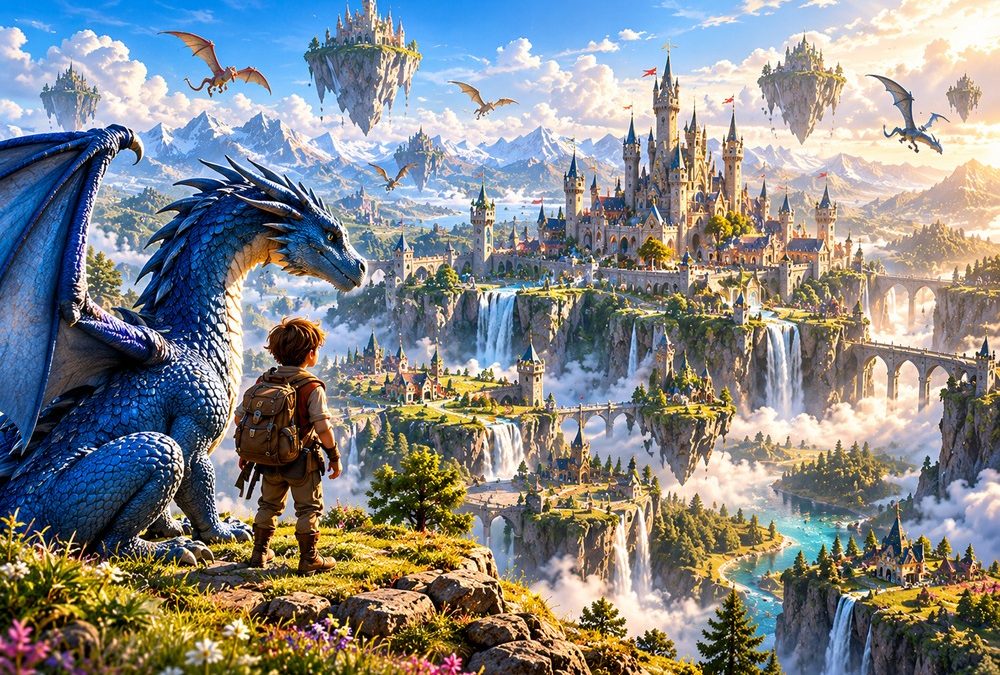
Sammy’s adventure begins with a new school and a dragon egg, but the official descriptions of the five books point towards larger quests and dangers across the Dragon World.
This article concentrates on from the floating circus to the dragon world. The published summary is the reliable starting point for factual claims, and any imagined possibilities are presented as questions rather than undisclosed events from the story.
An opening and a larger world
Connect Sammy's first dragon egg with the series' broader fantasy setting. To picture the starting point, consider the progression from a school arrival towards Dragon World conflicts. The official material gives an outline of this subject; reading the actual chapter is how we learn its details and see how it affects the characters. A fantasy setting becomes interesting when the extraordinary event affects an ordinary decision. Consider how the detail in this section might influence trust, belonging or responsibility. Those questions invite discussion without claiming that the novel contains an invented conversation or an unverified event.
In relation to an opening and a larger world, the distinction matters because a fan’s imaginative answer can be enjoyable but is not the same as J T Scott’s published account. Keep the two clearly separated when discussing the books.
A recognisable school
Consider why Dragamas provides an entry point to unusual events. The topic becomes clearer when placed beside the progression from a school arrival towards Dragon World conflicts. That is a useful basis for a conversation about expectations, because a known premise can support several sensible questions without anyone inventing an answer. A description of a book should help people understand what they may encounter without replacing the experience of reading it. The point here belongs to that balance: enough context to recognise the subject, but not a sequence of made-up spoilers.
In relation to a recognisable school, a reader might ask how this detail is introduced, what the main character knows at the time and which questions remain unresolved. Those are reasons to examine the chapter itself.
A dangerous opponent
Explain the Shape as a continuing force that creates tension. A newcomer may first focus on the progression from a school arrival towards Dragon World conflicts. Rather than supplying an invented scene, ask what information a reader would need to understand the situation, and look for those answers in the published story. It helps to consider the story from a new reader’s point of view. Without knowing later events, a person needs to understand why this part of the setting or relationship matters. A single confirmed fact is often more useful than an elaborate theory that the book never supports.
In relation to a dangerous opponent, keep that principle in mind when describing characters or events to a child. Let their own reading supply the surprises rather than presenting speculation as a summary.
Different books, different challenges
The published premise includes the school trip, whistle quest, Karmandor and finale from official summaries. Consider the progression from a school arrival towards Dragon World conflicts and the choices it suggests. In fantasy, a situation is engaging because a character must respond to it, not merely because the setting sounds unusual. This is a good point at which to notice the difference between a plot premise and its outcome. A premise tells us the problem or possibility facing the characters; it does not establish what decision they take or whether they succeed.
In relation to different books, different challenges, that leaves room for readers to make predictions. They can return to those predictions afterwards and compare them with the actual text, without needing a test or a formal worksheet.
Avoid an invented map
Do not claim unknown geographies or rules beyond the publisher's descriptions. Someone discovering the series might wonder about the progression from a school arrival towards Dragon World conflicts. The answer belongs to the text itself: predictions are enjoyable, but they should be recognised as predictions, not reported as established events. The most reliable way to explore this subject is to put the confirmed description beside the question a reader wants answered. The question encourages attention, while the description prevents guesses from being repeated as facts.
In relation to avoid an invented map, readers who enjoy the first instalment can follow the sequence of books, taking time to notice how the published challenges change rather than treating the series as interchangeable adventures.
Choose a genuine sample
Invite the reader to experience one of the free chapters before continuing. Return to the progression from a school arrival towards Dragon World conflicts when deciding where to read next. Following the authorised sequence leaves surprises with the writer and helps each book build on what a reader has already discovered. This detail gives a newcomer a concrete point of entry. Rather than memorising a long list of names or relying on a dramatic slogan, readers can look for how the story presents this element on the page. A useful question is what the element changes for Sammy or the people around him.
In relation to choose a genuine sample, if a reader has not reached that part of the series, it is better to remain curious than to assume an answer. The official chapter samples provide the right place to check the wording and discover the context.
Putting the idea into practice
Take the example of the progression from a school arrival towards Dragon World conflicts. Begin with what the official description actually establishes, then ask what a reader might still want to discover. Consider why Dragamas provides an entry point to unusual events. It is useful to keep two separate notes: “known from the publisher” and “question to ask when reading”. That small distinction stops speculation turning into a false plot summary. A parent or young reader can compare their early ideas with the sample chapter, and discover whether the writing builds anticipation through characters, setting or the particular problem Sammy faces.
The same care matters when discussing avoid an invented map. Do not claim unknown geographies or rules beyond the publisher's descriptions. Think about what the character has been told, what the reader knows and what remains unresolved. A story can be enjoyed without knowing its ending in advance. For someone deciding whether to start the series, the useful information is the book’s position, its published premise and where the genuine opening chapter can be read. Those details are more valuable than unverified claims about secret scenes, invented characters or imagined rules.
What to read next
For from the floating circus to the dragon world, the most useful next step is to consider choose a genuine sample. The official Sammy Rambles book descriptions and free chapters give readers a reliable route into the story. A useful next step is to read the relevant opening and decide which character, question or place you want to follow. Enjoying the world does not require accepting invented facts about it.