
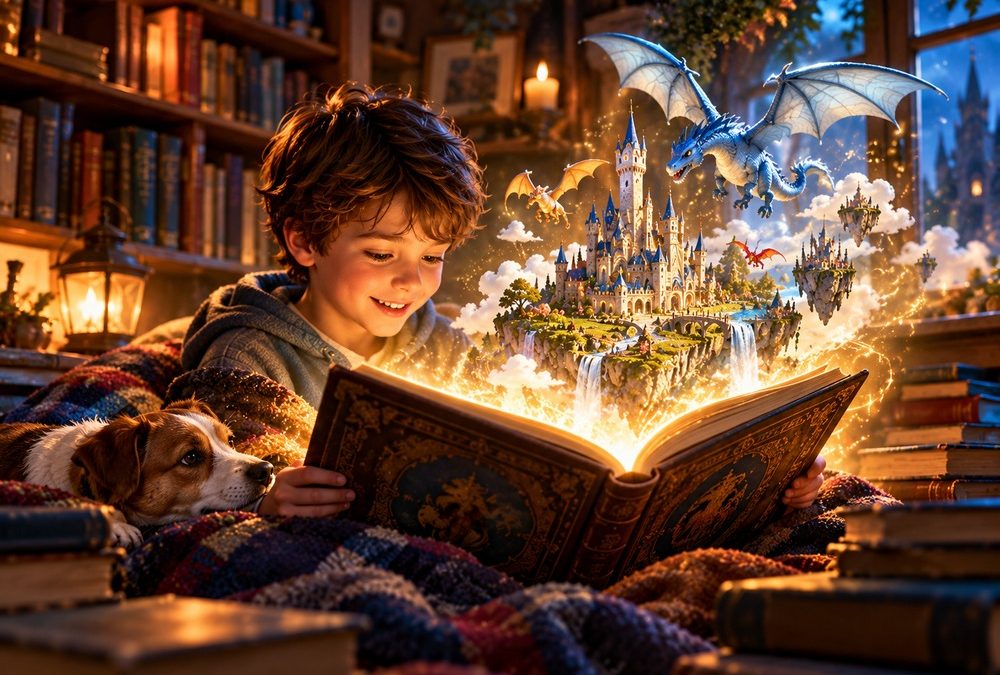
Pictures are not an optional decoration in early books. They tell stories, invite conversation and help children connect spoken language with people, objects and actions. Learning to look carefully at an illustration is different from reading the printed words, but it is part of an enjoyable introduction to stories.
Following a visual story
Open a wordless or picture-led book and compare what changes from one page to the next. Look at where characters stand, what they carry and how their expressions change. Encourage observations before asking for a plot summary.
Naming what appears
When a young child points to a bicycle, name it and expand naturally: the bicycle is leaning against the wall. This gives a little more language without turning every picture into a vocabulary quiz. Wait for the child to add a thought.
Pictures and inference
A drawing may show muddy footprints, a closed gate or a surprised face. Ask what might have happened, while accepting more than one plausible explanation. Pointing to visual evidence helps a child connect clues with ideas without implying there is always a single answer.
Illustrations and printed text
Sometimes a picture shows more than the sentence says; sometimes it creates a joke or a question. Read a short line, then look back at the picture together. Clarify that noticing pictures supports understanding but is not the same as sounding out unfamiliar words.
Different kinds of illustration
Photographs, cartoons, textured collages and detailed fantasy scenes invite different kinds of attention. Let children compare two books rather than announcing that one style is better. Their preferences may depend on colour, familiarity, humour or the amount to discover.
When pictures become a bridge
Older children can use images to discuss setting and mood before tackling a challenging passage. However, beginners learning to decode should still practise using the letters to read words. Pictures can enrich meaning without being used to guess a printed word.
A real-life example
In a picture book about a picnic, the first illustration shows a full basket and a small patch of rainclouds. On the next page, the basket is empty and the friends are running towards shelter. Before reading the sentence, an adult asks what changed. A child points to the clouds; another notices a bird carrying a sandwich. These are different observations of the same sequence. The adult can ask, “What makes you think the bird took it?” and listen to the clue the child identifies. That is a conversation about evidence, not a formal reading test. If the child invents an explanation unsupported by the picture, the adult can enjoy the idea and distinguish it from what the illustration actually shows. With older readers, compare the picture with the accompanying printed line. What does the image add? What does the sentence tell us that a still picture cannot? Such questions help show that meaning is built from more than one source. They do not teach an unfamiliar printed word to decode itself. For that separate task, children need to look at letters and use the phonics strategies they have been taught. Two activities can sit beside one another without being confused.
What to avoid
Repeatedly asking a child to name every object on a page can turn an enjoyable story into a test. Offer descriptions as well as questions, and let the child spend time looking. Pictures should not be used to encourage beginners to replace written words with guesses. Story understanding and accurate word reading work together, but each deserves the right support.
A simple picture-walk activity
Choose a picture book with a clear sequence and spend a few minutes exploring it before reading the printed sentences. Begin with the cover and ask what the child can actually see: a door, a suitcase, a dog looking away. Turn two pages and ask which detail has changed. Perhaps the suitcase is now open or the dog has moved behind a tree. Ask what might happen next and allow different answers. This is not an attempt to make the child guess the correct text. It is an exercise in noticing evidence and constructing possible meanings from images. When you later read the words aloud, discuss whether the illustration and sentence tell the same part of the story. Sometimes the words identify a feeling the picture shows only indirectly. Sometimes the illustration supplies the joke while the sentence sounds quite serious. These differences make picture books rich even for children who can already read independent text. The activity can stop after a few pages rather than becoming a lengthy tour of every detail.
A slightly older child can explore perspective by imagining how two characters in the same illustration might describe the event differently. A person standing near the gate may know something that another character cannot see. Pointing out this difference encourages careful attention to position and expression rather than wild speculation. A wordless book can be especially useful because the child has room to narrate a sequence in their own language. An adult can take turns: the child describes one page and the adult the next. If the child invents an extra event, welcome the creativity but make it clear that it is their version rather than a fact visible on the page. For beginning readers, end the picture walk before any separate phonics practice begins. When practising printed words, return attention to the graphemes and the sounds they represent. A child should be free to enjoy illustration without learning to rely on it as a substitute for decoding.
Questions parents and carers often ask
Is a wordless picture book a proper book?
Yes. It can have a character, sequence, problem and ending, all conveyed through images. A child and adult can create spoken language around those details. The absence of printed sentences does not make the story unworthy of attention.
Should I correct an imaginative explanation?
Distinguish between a playful invention and a claim about what the picture shows. “That is a funny idea; what clues do we see on this page?” keeps imagination welcome while encouraging careful observation.
Are pictures only for preschoolers?
No. Older readers can use illustrations to consider atmosphere, compare settings or discuss visual storytelling in comics. The questions become more sophisticated, but looking carefully remains a useful part of reading.